
Available 7 Days A Week - No Weekend Surcharge

VLOGS

vlogs

NEED A PLUMBER? WE’RE IN YOUR TERRITORY!

When it comes to underground plumbing and reticulation upgrades, cutting corners often creates bigger and more expensive problems later. What may initially seem like “just a small repair” can quickly turn into recurring leaks, poor water pressure, failed irrigation systems, or even contamination risks if the plumbing infrastructure underneath is already compromised.

In this latest vlog from Plumbdog Plumbing, Zenn tackles a property where the customer had already experienced a burst pipe on the main water line. While a temporary repair had previously been completed, further investigation revealed heavily corroded copper pipework running back toward the water meter.

Rather than simply patching another section and hoping for the best, the decision was made to properly replace the ageing pipework and prepare the property correctly for future reticulation installation.

Why Corroded Copper Pipework Becomes a Major Problem

Underground copper pipework can last many years, but over time factors such as soil conditions, moisture, age, water quality, and previous repairs can all contribute to corrosion and deterioration.

In many Perth properties, older underground copper lines eventually develop weak points that can lead to:

  • Burst pipes
  • Hidden underground water leaks
  • Pressure loss
  • Water wastage
  • Damage to landscaping
  • Repeated repair costs

In this case, the property had already suffered a burst pipe, and while water leak detection and emergency repair had been completed previously, the surrounding pipework showed clear signs of deterioration.

As Zenn explains in the video, leaving old corroded pipework in place would likely mean future problems were only a matter of time.

Instead of carrying out another temporary fix, the smarter long term approach was chosen:
replace the ageing copper properly while also preparing the infrastructure for future irrigation works.

Excavation and Removal of the Old Pipework

The first stage of the job involved excavation around the affected water service line.

Once exposed, the extent of the corrosion became much clearer. The old repair section and deteriorated copper pipework were removed entirely to eliminate future weak points within the line.

This step is incredibly important because partial repairs on badly aged pipework often only shift the problem elsewhere. Once one section fails, nearby weakened sections commonly follow shortly afterwards.

By removing the compromised pipework completely, the property owner gains a far more reliable long term solution.

Installing a New Copper Main Water Line

After the old line was removed, new copper pipework was installed neatly back toward the water meter.

Copper remains a popular choice for water service lines because of its durability, strength, and long term reliability when installed correctly. Proper installation methods are essential to ensure the pipework is protected and supported appropriately underground.

The new line was connected into the existing water supply and positioned carefully to allow for the future reticulation system installation.

Importantly, this was not simply about replacing damaged pipework. The work was also strategically planned so future irrigation contractors could connect their system easily without requiring unnecessary additional excavation or rework later.

This kind of forward planning helps save both time and money for the customer in the long run.

Why Proper Reticulation Cut-Ins Matter

One of the most important parts of this project was installing a compliant reticulation cut-in.

Many homeowners may not realise that irrigation systems must be installed correctly to protect the property’s drinking water supply. Incorrect installations can create contamination risks through backflow, particularly if pressure changes occur within the water network.

To prevent this, proper backflow protection devices and compliant spacing requirements must be followed under WA plumbing regulations.

As part of this installation, Zenn ensured the reticulation connection was installed at least one metre away from the water meter, helping maintain compliance with current plumbing standards.

The reticulation setup included:

  • New reticulation tee-off
  • Isolation valve
  • Master solenoid
  • Dual check valve for backflow prevention
  • Protective valve box for future servicing access

These components all play an important role in ensuring the future irrigation system operates safely and efficiently.

The Importance of Isolation Valves and Solenoids

Isolation valves are one of those components many people overlook until something goes wrong.

Having a properly installed isolation valve allows sections of the irrigation system to be shut off independently without affecting the property’s entire water supply. This becomes extremely valuable during future maintenance, repairs, or irrigation upgrades.

The master solenoid also forms a critical part of modern reticulation systems by controlling water flow electronically through the irrigation controller.

Because the customer’s irrigation system had not yet been installed, the wiring was intentionally left disconnected and the valves turned off safely until the irrigation contractor completes the next stage of works.

This ensured everything was properly prepared and ready to go without risking accidental operation or leaks in the meantime.

Backflow Prevention Protects Your Drinking Water

One of the most important safety components installed during the project was the dual check valve.

Backflow prevention devices help stop contaminated water from flowing backward into the property’s drinking water supply. Without proper backflow protection, irrigation systems can potentially allow contaminants from soil, fertilisers, or stagnant water into the potable water system under certain pressure conditions.

This is why compliant backflow prevention is not just recommended, it is an essential part of proper plumbing installation.

Professional licensed plumbers understand these compliance requirements and ensure installations meet current WA standards.

Proper Groundwork Creates Better Long Term Outcomes

One thing that stands out in this project is the attention to detail in the groundwork itself.

After installation:

  • The valve box was backfilled neatly
  • Blue metal was added around the valve box for drainage and protection
  • Pipework was secured correctly
  • The site was cleaned and prepared for future landscaping

These finishing details matter because good plumbing work is not only about what functions today, it is about ensuring the installation remains accessible, protected, and serviceable years into the future.

Real Plumbing Solutions, Not Temporary Patches

At Plumbdog Plumbing, the focus is on long term plumbing solutions rather than repeated temporary repairs.

Whether it is replacing corroded water service lines, installing compliant reticulation cut-ins, detecting underground leaks, or preparing properties for irrigation upgrades, proper workmanship makes a major difference to reliability and future maintenance costs.

As this project demonstrates, investing in doing the groundwork properly today can help homeowners avoid far bigger problems tomorrow.

🐾 Real plumbers. Real upgrades. Proper groundwork done right.

A customer requested a straightforward toilet swap, but even “simple” jobs need careful attention to detail. In this video, Dan from Plumbdog takes you through the full process of replacing a toilet and servicing a tap, showing the professional steps behind a leak-free installation.

From inspecting the flange to connecting the water supply and servicing taps, this video gives a full walkthrough of best practices for plumbing installations.

In This Video

•Removing the old toilet and inspecting the flange
•Installing a new wax ring and securing the toilet pan
•Connecting a new flexi hose and stopcock
•Servicing a tap — inspecting, replacing washers, and leak testing
•Cleaning up and ensuring the area is tidy for the customer

What You’ll Learn

Proper steps for a safe, leak-free toilet installation
How to inspect and prepare the flange for a new toilet
Techniques for connecting water supply and testing for leaks
Tap servicing tips to fix drips and improve operation
The importance of finishing touches and customer walkthroughs

Even small jobs have a lot of steps behind the scenes — this video shows exactly how Plumbdog ensures every installation is done right the first time.

Location: Perth, WA
Need professional plumbing help? Visit Plumbdog Plumbing

For many homeowners across Perth, Western Australia, irrigation systems are something that quietly operate in the background without much thought. The sprinklers come on automatically, the lawns stay green, the gardens remain healthy, and everything appears to work exactly as it should. That is, until one day a section of the reticulation system suddenly stops functioning properly and nobody knows where the problem is actually located.

One of the most common challenges with irrigation systems is locating buried solenoids. Over time, these underground valves often disappear beneath grass, soil, mulch, paving, or landscaping changes, leaving homeowners with no idea where critical parts of their irrigation system are hidden. When repairs or maintenance become necessary, this can quickly turn into a frustrating and expensive exercise if the right equipment and experience are not involved.

At Plumbdog Plumbing, we regularly assist homeowners with underground plumbing and irrigation issues including buried irrigation solenoids, hidden water leaks, underground pipework faults, and reticulation repairs. While we are certainly not afraid to get our paws dirty, we also believe there is a smarter and more efficient way to approach underground diagnostics. Digging is simply part of plumbing life, but there is a huge difference between targeted excavation and unnecessarily tearing apart an entire backyard hoping to eventually find the problem.

That is exactly why we combine practical plumbing experience with modern locating technology. We like to say we have “all the gear and every idea,” and nowhere is that more apparent than when tracking down hidden underground plumbing and irrigation faults.

Understanding What an Irrigation Solenoid Does

Most people have heard the term “solenoid” before, but many homeowners are unsure what these components do or why they are so important.

An irrigation solenoid is essentially an electrically controlled valve that manages water flow to different parts of a reticulation system. When the irrigation controller activates a watering schedule, it sends an electrical signal through underground wiring to the relevant solenoid. Once activated, the solenoid opens and allows water to flow through a particular irrigation zone.

This is what enables different areas of the property to water independently. One solenoid may control the front lawn sprinklers, another may operate drip irrigation through garden beds, while another may manage the backyard reticulation. Without these valves functioning correctly, the irrigation system simply cannot distribute water where it is needed.

The challenge is that these valves are rarely visible. In most installations, solenoids are buried underground inside valve boxes for protection and to keep the system visually unobtrusive. Over the years, however, many of these valve boxes become completely hidden as lawns grow over them, gardens are redesigned, paving is added, or soil levels gradually change. In some cases, homeowners move into a property years after installation and have absolutely no idea where the irrigation valves are even located.

This becomes a major problem when something goes wrong.

A reticulation zone may suddenly stop operating, water pressure may drop unexpectedly, sprinklers may fail to activate, or sections of the garden may become flooded because a valve is no longer shutting off properly. Without knowing where the buried solenoid is located, even relatively straightforward irrigation repairs can become extremely difficult.

Why Proper Detection Matters

Traditionally, locating buried irrigation valves often involved a lot of guesswork. Contractors would attempt to follow underground pipework manually, probe around gardens, or simply begin digging in areas where they believed the valves might be located. While this approach occasionally works, it can also lead to unnecessary excavation, damaged landscaping, wasted labour time, and significant frustration for homeowners.

At Plumbdog, we genuinely enjoy the physical side of plumbing work. We are always happy to grab the shovel, get our paws dirty, and do whatever is required to solve the problem properly. But we also understand that most homeowners would prefer not to have their entire backyard dug up simply to locate one hidden valve.

That is where specialised locating technology becomes incredibly valuable.

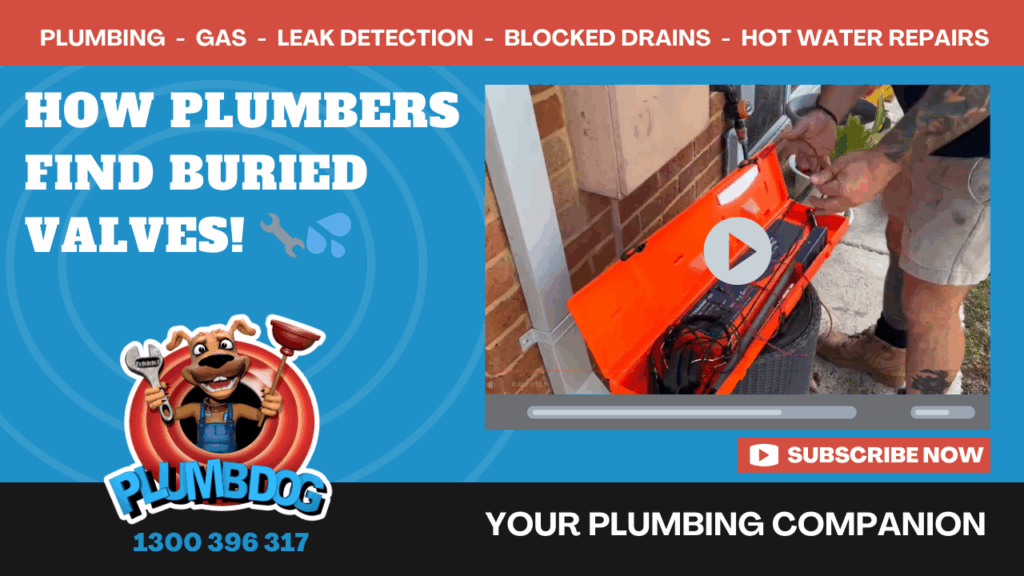
In our VLOG, Evan from Plumbdog Plumbing demonstrates how professional plumbers use a dedicated solenoid locator to accurately identify buried irrigation valves underground. Rather than relying purely on guesswork, the locating equipment allows us to narrow down the search area significantly before excavation even begins.

The process itself is quite fascinating. The locator is first connected directly to the irrigation controller or system wiring. Once connected, the device sends a traceable electrical signal through the underground wiring network which runs directly to the buried solenoids. A handheld locating wand is then used above ground to track the signal path and identify the valve locations beneath the surface.

As the technician moves closer to the buried solenoid, the signal strength increases, allowing the exact location to be pinpointed with far greater accuracy than traditional manual searching methods.

One of the key parts of the process involves adjusting the signal strength correctly. In the video, Evan explains how settings between four and eight often provide the best balance between range and precision. If the signal is too weak, the locator may struggle to trace the underground wiring properly. If the signal is too strong, the detection area can become too broad, making it harder to accurately pinpoint the valve location. Understanding how to properly balance these settings is something that comes with both experience and a solid understanding of underground plumbing systems.

Experience Still Plays a Huge Role

While modern locating equipment is extremely effective, technology alone does not solve problems. Like many aspects of plumbing and leak detection, successful diagnostics still rely heavily on practical experience and technical understanding.

At Plumbdog, we regularly perform underground investigations throughout Perth involving water leak detection, blocked drains, hidden pipework tracing, gas leak detection, and irrigation system diagnostics. Many of these jobs share similar principles. The equipment provides valuable information, but understanding how to interpret that information correctly is what ultimately leads to accurate results.

During irrigation investigations, it is also quite common to uncover additional underlying issues. What initially appears to be a simple buried solenoid problem may actually involve damaged underground wiring, leaking pipework, faulty valves, root intrusion, corroded fittings, or previous poor quality repairs. Because we are licensed plumbers and not simply irrigation installers, we are often able to both locate and repair the broader plumbing problem at the same time.

This can save homeowners considerable time, money, and frustration compared to coordinating multiple contractors for different stages of the work.

Minimising Damage While Solving the Problem Properly

One of the biggest benefits of professional locating equipment is the ability to minimise unnecessary disruption to the property. Accurate detection allows excavation to remain targeted and controlled rather than excessive and destructive.

For homeowners, this often means less damage to lawns and landscaping, less unnecessary digging, faster diagnosis, reduced labour costs, and a far more efficient repair process overall.

More importantly, once the buried valves are properly identified and exposed, future maintenance becomes much easier. Homeowners and technicians alike gain a much clearer understanding of the irrigation system layout, making future servicing, upgrades, or repairs far less invasive.

At Plumbdog Plumbing, we believe good plumbing is not simply about digging holes and replacing parts. It is about combining practical hands on experience with modern technology to deliver smarter, more efficient, and longer lasting solutions.

Of course, we are always happy to get our paws dirty when the situation calls for it. But by investing in the latest locating equipment and continually improving our underground diagnostic capabilities, we can enjoy the digging without destroying the whole backyard in the process.

Because at the end of the day, having all the gear and every idea means being able to solve problems properly while treating our customers’ homes with the care and respect they deserve.

Richard from Plumbdog Plumbing takes you along on a full leak detection and repair in Mandurah, tracking down a tricky hot water line leak.

This video showcases professional techniques for finding and fixing hidden hot water leaks, even in tight or awkward spaces.

In This Video

•Detecting running water using acoustic and infrared equipment
•Isolating the leak on the hot water line
•Boosting flow to locate the leak effectively
•Tight-space pipe repairs using B-Press fittings
Successfully repairing the burst and restoring water flow

Key takeaways:
How to use acoustic and infrared equipment for precise leak detection
Techniques for isolating the hot water system
Tips for repairing leaks in tight or awkward spaces
Safety considerations when working with high-pressure water systems

The Result

Hot water leak located and repaired
Burst pipe section replaced using B-Press fittings
Water flow restored with no further leaks
Professional repair completed safely in tight conditions

Location: Mandurah, WA
Need help with hot water leaks, burst pipes, or plumbing repairs? Visit Plumbdog Plumbing

Load More Vlogs

Replacing Corroded Pipework the Right Way Before Installing Reticulation

When it comes to underground plumbing and reticulation upgrades, cutting corners often creates bigger and more expensive problems later. What may initially seem like “just a small repair” can quickly turn into recurring leaks, poor water pressure, failed irrigation systems, or even contamination risks if the plumbing infrastructure underneath is already compromised. In this latest vlog from Plumbdog Plumbing,

Read More

Toilet Replacement & Tap Service Step-by-Step | Plumbdog Plumbing

A customer requested a straightforward toilet swap, but even “simple” jobs need careful attention to detail. In this video, Dan from Plumbdog takes you through the full process of replacing a toilet and servicing a tap, showing the professional steps behind a leak-free installation. From inspecting the flange to connecting the water supply and servicing taps, this video gives

Read More

Locating Buried Irrigation Solenoids Without Destroying Your Backyard

For many homeowners across Perth, Western Australia, irrigation systems are something that quietly operate in the background without much thought. The sprinklers come on automatically, the lawns stay green, the gardens remain healthy, and everything appears to work exactly as it should. That is, until one day a section of the reticulation system suddenly stops functioning properly and nobody

Read More

Hot Water Leak Detection & Repair | Mandurah Plumbing | Plumbdog Plumbing

Richard from Plumbdog Plumbing takes you along on a full leak detection and repair in Mandurah, tracking down a tricky hot water line leak. This video showcases professional techniques for finding and fixing hidden hot water leaks, even in tight or awkward spaces. In This Video •Detecting running water using acoustic and infrared equipment •Isolating the leak on the

Read More

Supply & Install Enquiry

Apply for a position form

Upload documents (CV and cover letter)

Contact Us

$clamp(document.querySelector('.vlog-limit p'), {clamp: '5'});